
To understand the strategic value of chatbot implementation in AI customer support, one must first dissect the landscape of customer interactions in business today. As demand for instant service grows, the conventional methods of customer support are being replaced by more efficient, automated solutions. AI-powered chatbots stand at the forefront of this shift, offering businesses of all sizes a mechanism not only for improving customer service efficiency but also for achieving significant operational cost reductions.
What This Tool Actually Does
AI customer support chatbots are automated systems designed to simulate conversations with users. Their primary function is to handle a plethora of customer service tasks ranging from addressing FAQs to complex problem-solving tasks. Built on natural language processing algorithms, these chatbots can understand customer queries in real time and provide relevant, accurate responses. The strategic value of this tool lies in its foundation of automation and scalability. Businesses can operate on a 24/7 support model without human intervention, enhancing customer experience and freeing up valuable employee time for more complex tasks.
Key Features That Matter for Business
When considering the implementation of AI chatbots, there are several features that are particularly beneficial for business operations:
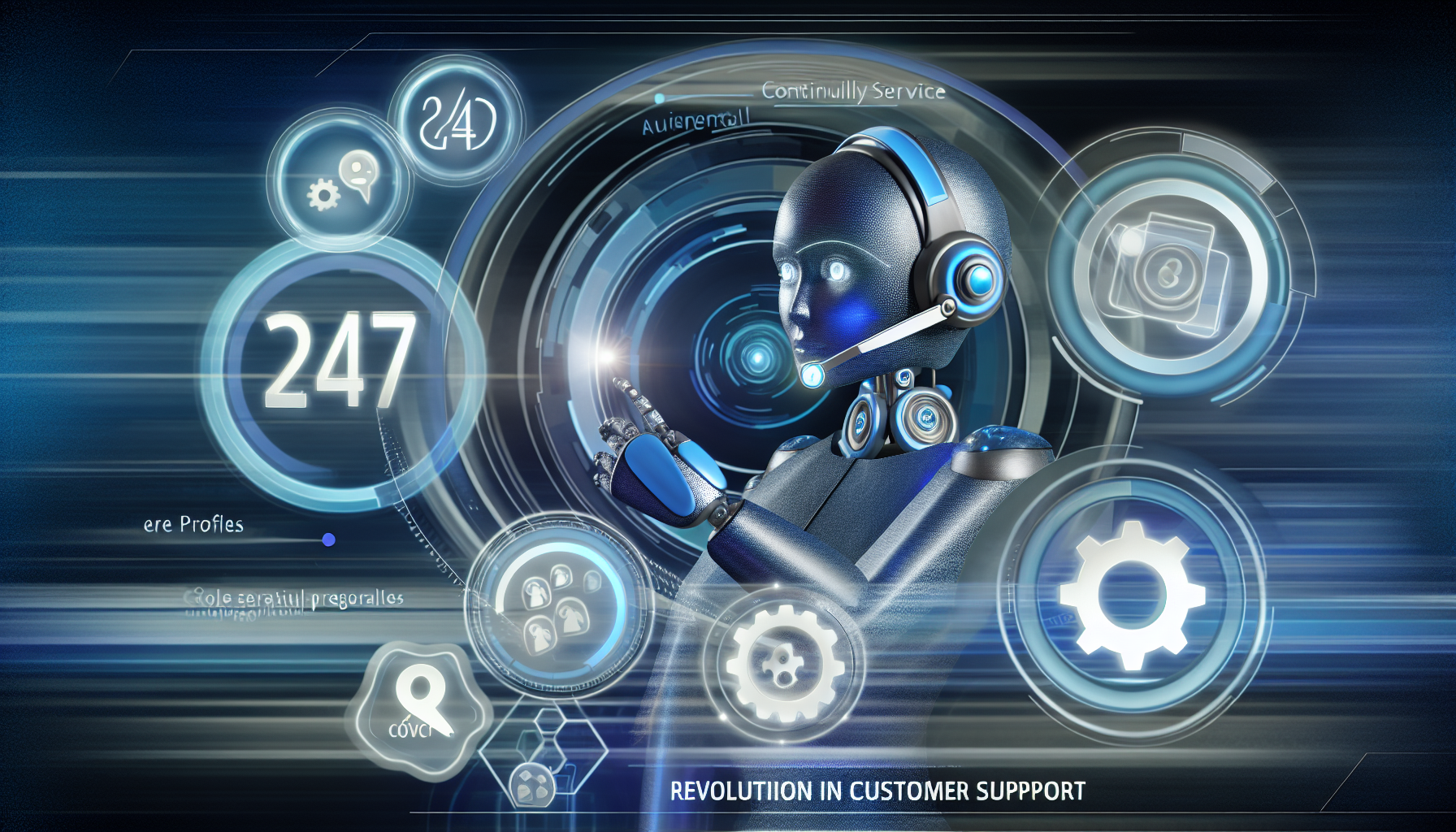
- 24/7 Availability: Chatbots provide continuous service, ensuring that customer queries are instantly addressed at any time of day, significantly improving customer satisfaction.
- Scalability: As your business grows, chatbots can easily scale to handle increased communication without the need for additional staff.
- Personalization: By analyzing data from customer interactions, chatbots can offer personalized responses tailored to individual customer needs and preferences.
- Integration Capabilities: Modern chatbots like those from OpenAI and Google Dialogflow integrate with existing CRM and other business systems, allowing seamless communication across platforms.
- Multilingual Support: For businesses operating in multiple regions, chatbots offer multilingual capabilities to cater to diverse customer bases.
Real-World Use Cases
Small Business (5-10 employees)
Imagine a niche e-commerce retailer with a team of 10 employees focused on selling handmade goods. They implemented an AI chatbot from Tidio to manage inquiries during off-peak hours. Within months, the small team noticed a 50% reduction in mundane tasks and an increase in sales due to improved customer engagement. The chatbot answered repeated queries about order status and delivery times, allowing the team to focus on product quality and marketing strategies.
Growing Company (50+ employees)
Consider a midsize software company with a growing customer base and a support team struggling under the weight of routine inquiries. By deploying a custom chatbot solution from Zendesk, they automated about 30% of their support interactions. This not only led to faster response times but also improved the employee workload balance, enabling the team to handle more complex customer needs effectively. The strategic implementation of such a tool has proven to be a pivotal factor in scaling their operations smoothly.
Pricing and ROI Analysis
Pricing models for AI chatbots vary widely depending on features and the level of customization required. Generally, platforms like Intercom offer tiered pricing models starting from as low as $50/month for basic services, scaling to $499/month for more comprehensive enterprise solutions. From an ROI perspective, consider the cost of human resources required for around-the-clock customer support. By automating a portion of customer interactions, businesses can see substantial savings in both time and money. A typical ROI analysis over a year might show savings in labor costs of up to 30-40%, with an increase in customer satisfaction and loyalty.
Honest Pros and Cons
Pros:
- Efficiency Gains: Rapid response times and reduced operational bottlenecks.
- Cost Reduction: Lowers the necessity for an extensive human support team.
- Consistency: Uniform interaction quality across all communications.
Cons:
- Complex Query Limitation: Struggles with highly nuanced issues beyond its programming scope.
- Customer Perception: Some customers may prefer human interaction for complex issues.
- Implementation Costs: Initial setup and training might be significant for bespoke solutions.
How It Compares to Alternatives
AI chatbots are not the only automated solution available. Alternatives include traditional FAQ pages, ticketing systems, and outsourced support teams. Compared to these, chatbots offer immediate, interactive responses and are available at all hours without additional staffing costs. Competitors like live chat software provide human touch but lack the 24/7 availability and scalability. In contrast, knowledge base solutions can offer depth in information but lack real-time interaction.
Who Should Use This (And Who Shouldn’t)
Chatbots are ideal for businesses seeking to improve response efficiency and reduce operational costs, particularly those handling large volumes of repeat queries. Sectors such as e-commerce, SaaS, and online services can derive significant benefits. However, businesses in highly specialized industries or those that prioritize personalized customer interaction might find that fully automated chatbots do not meet their nuanced service requirements. In these cases, a hybrid approach with both AI and human support might offer a more balanced solution.
Frequently Asked Questions
- How quickly can a chatbot be implemented?
- Most foundational chatbot platforms offer a quick setup that can go live within a few days. However, full customization may take weeks.
- Can chatbots handle complex queries?
- While they’re excellent for handling straightforward, repetitive tasks, complex queries might require human intervention.
- What kind of businesses benefit the most from chatbots?
- Businesses with high customer interaction volume like retail, banking, and tech support derive significant advantages.
- Are chatbots cost-effective for small businesses?
- Yes, especially if they deal with repetitive inquiries. They free up resources for other critical business operations.
- What level of personalization can chatbots offer?
- Advanced chatbots can be highly personalized, learning from past interactions and data to tailor responses to individual customer needs.
Final Recommendation
In today’s competitive landscape, AI chatbots bring an alluring proposition – the promise of efficiency blended with the modern needs of customer support. The data shows that by implementing chatbot solutions, businesses can not only reduce operational costs but also enhance customer satisfaction through consistent service delivery. Consider the implications of not leveraging an AI solution when your competitors likely are. While there are some limitations, the benefits far outweigh the potential drawbacks when strategically deployed.
Get Weekly Tool Reviews
I test new business automation tools every week. Join other professionals who use these insights to make better software decisions.
Professional AI automation workspace and tools overview
Subscribe for updates
for practical reviews, no fluff.